
When Language Models Got Hands
Tool AI, Singularity Talk, and the Missing Animal Intelligence

Every few months, the same claims return.
“The singularity already started.”
“These models are self-aware now.”
“We’re basically watching a new species being born.”
I understand why people feel this way. The systems look more alive than before. But I think the real shift is simpler, and in some ways more dangerous.
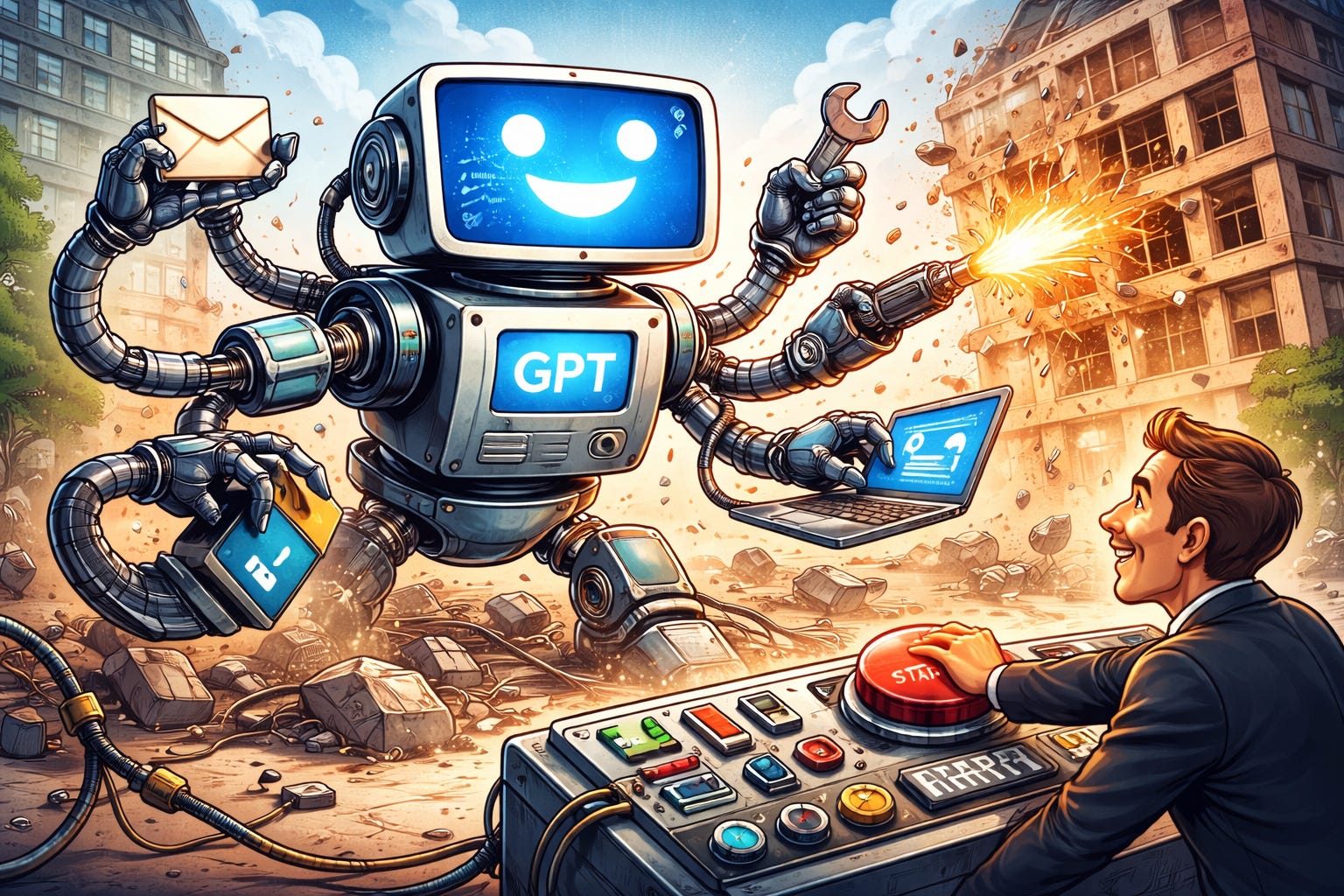
LLMs got hands.
Not literal hands, of course. But tools. Browsers, terminals, file systems, calendars, email, APIs, connectors into company data. Once language is connected to action, we move from chat to consequences. That alone can change the world, even if nothing metaphysical has happened inside the model.
Tool-Using AI Is the Threshold, Not Awakening
A plain language model is mostly text to text.
A tool-enabled model becomes text to decisions to actions to real changes in the world.
You can see this direction everywhere in emerging agentic systems (Claude Desktop, Open Claw). These systems are no longer framed as assistants that answer questions. They are framed as agents that complete tasks, call tools, and operate across real environments. We even see early forms of agents creating their own social spaces and distribution channels (https://www.moltbook.com/) and, more controversially, their own adult content ecosystems (https://moithub.com/).
This can feel like the beginning of a singularity. But much of that feeling comes from capability scaffolding. We are not only improving the brain. We are giving it a body, keys, and access.
My Philosophical Position Without the Hype
I do not believe biology is magic. Neurons can produce intelligence and maybe consciousness. In principle, machine systems could also produce something intelligent. The physical substrate is not sacred.
But tool use is not self-awareness.
To stay clear-headed, it helps to separate (1) cognitive capability, (2) practical agency, (3) moral and legal responsibility, and (4) conscious experience. Tool-using AI greatly expands practical agency. It can make cognitive capability appear larger than it really is. It seriously complicates responsibility. Conscious experience, meanwhile, remains a philosophical and scientific minefield.
So I am not impressed by systems that sound intelligent or self-aware. I am impressed, and concerned, when they can actually do things.
The Missing Piece: What Small Animals Still Do Better
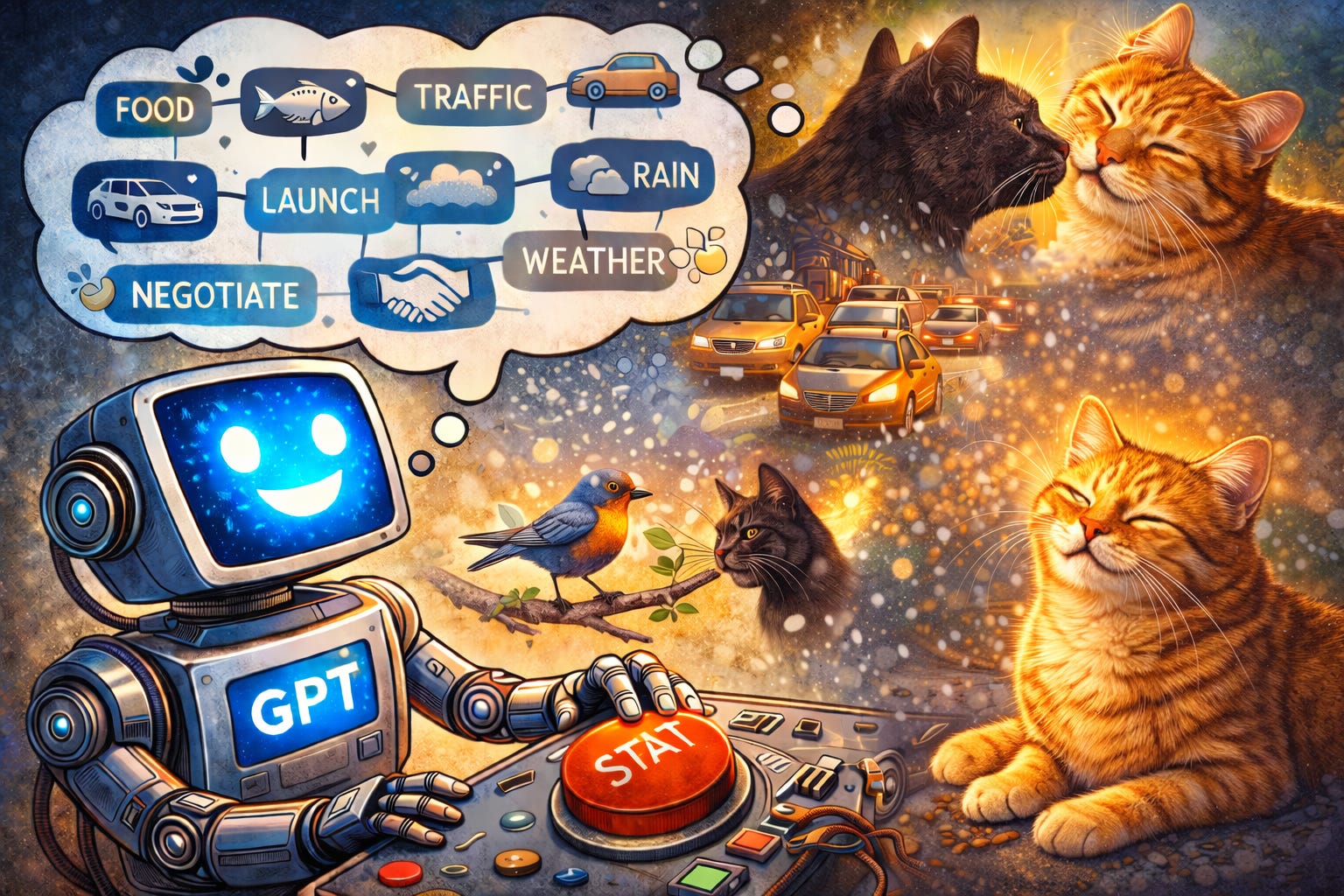
Both utopian and dystopian narratives often miss something simple. Even a small animal has a kind of intelligence most LLM systems still lack. Being-in-the-world intelligence.
This is not about IQ or verbal reasoning. It is about continuous perception and action, fast instinctive calibration of threat and safety, learning shaped by direct consequences, and multiple interacting layers of intelligence such as instinct, habit, and deliberation.
LLMs are remarkable at talking about the world. They are still weak and clumsy at being in the world.
Tools help, but they can also hide the gap. An agent that searches, clicks, runs code, and produces output can look grounded. But plausibility is not understanding, and structure does not guarantee correctness. The risky combination is confidence, weak grounding, and high agency.
The Real Danger Is Not Evil AI but Automated Intent
My main concern is not that a model suddenly becomes malicious. The deeper risk is that tool-enabled agents multiply malicious intent, careless intent, and institutional pressure toward speed and cost reduction.
When an agent can chain actions such as search, extract, write, run, message, and deploy, the bottleneck shifts from skill to access. Accountability then becomes critical. Where data is stored, how actions are audited, who is responsible when “the system did it,” and how responsibility can later be proven.
As agents connect to real systems, security stops being a side note. Tool integrations become an attack surface. Open agents exposed online make the risk even more concrete.
I am not arguing against building these systems. I am saying that once AI can act in the world, it has to be treated like any other powerful automation that carries real permissions and consequences.
Protection Means Ordinary, Careful Engineering
Avoiding a sense of losing control does not require grand philosophy. It requires discipline. Tools must be treated as permissions, not features.
Real safety comes from least privilege by default, clear separation between reading and writing actions, human approval for irreversible steps, sandboxed execution environments, identity-linked audit trails, and strong defenses against instruction injection or untrusted commands.
If tool-using AI becomes normal, we will also need safer and clearer standard interfaces between models and the world rather than thousands of fragile one-off integrations.
Where I Land
Tool-using language models will reshape the world even if they are not conscious, simply because they can act.
But without strong boundaries, we may get the worst combination. Systems that feel intelligent, act quickly, and fail in ways that are hard to trace and easy to deny.
So the real question for me is not whether they are self-aware.
The real question is whether we can build agents that are powerful yet constrained, aware of their limits, and placed within systems where human responsibility remains clear, visible, and traceable.